
How to Use VR to Prepare for a Job Interview
Table of Contents:
Key Takeaways
- Virtual environments trigger real physiological responses to stress.
- Repetitive practice builds automatic responses to tough questions.
- Data tracking exposes specific vocal and physical habits you need to fix.
Sweaty palms and a racing heart ruin good answers, and you cannot fake the physical stress of an interview by staring at a mirror. Virtual reality puts your brain into the room before the actual day arrives. Practicing under simulated stress builds a permanent tolerance to anxiety.
Beating Interview Anxiety with VR
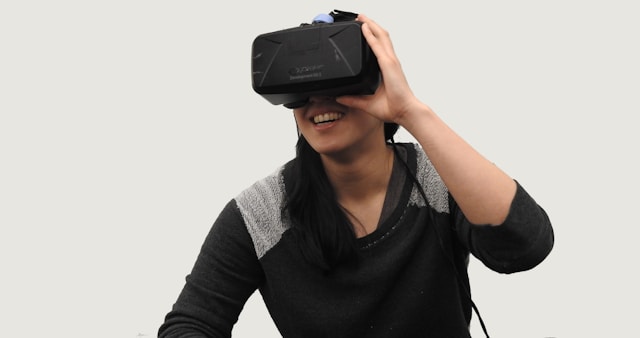
Virtual spaces trick your brain into feeling genuine pressure. When you put on a headset, the empty bedroom disappears, and you sit across from an avatar that maintains strict eye contact. The brain processes these simulated interactions similarly to real-world encounters, causing your heart rate to spike just like it would in a real boardroom.
This intense environment makes virtual reality soft skills training highly effective. You might stumble through your answers the first few times, but by the fifth run, your delivery smooths out. The software allows you to repeat the same scenario until you master it, letting you face a friendly hiring manager or a hostile panel of executives, so you’re prepared for any personality type.
Refining Your Delivery
Good answers fail if your voice shakes because hiring managers judge your tone and pacing just as much as your resume. You need to hear exactly how you sound when a hiring committee asks about your biggest weakness.
Dedicated virtual reality public speaking training helps you strip away filler words and nervous pauses. You can record your sessions and watch them back from the interviewer’s perspective to confront the verbal crutches hurting your pitch. Once you realize you look at the floor every time you discuss your previous job, you can consciously correct it. The headset sensors catch every nervous glance that a human mentor might miss.
Evaluating Performance with Objective Data
Friends give polite feedback, but software gives you objective facts. A human partner might ignore your nervous fidgeting, whereas a VR system tracks your hand movements, eye contact percentage, and speaking volume.
This objective data shows why relying on VR as a tool for measuring competencies is becoming the industry standard. You see a clear breakdown of where you lose focus or drop your voice, allowing you to fix specific behaviors in your next session. Companies frequently use VR training in HR to assess candidates today.If you train with the same technology companies use to test you, you gain an immediate advantage.
The Shift to Active Learning
Watching video tips keeps you passive, and reading a list of answers rarely builds muscle memory. You only get better at interviewing by actually speaking the words out loud.
Understanding the difference between passive and active virtual reality learning explains why doing outpaces watching. In a virtual simulation, you have to answer the question right now without waiting to find the perfect word in a script. Active participation forces you to construct sentences on the fly rather than recite them in your head, mirroring the unpredictable nature of a real conversation.
Start Practicing with Purpose
Stop rehearsing in an empty room. The Mazer Trainer platform gives you the environments and the data to fix your flaws before the real interview.
HR teams can also build customized assessment environments using Mazer for HR professionals.
Contact our team today to set up your virtual training space.
Do I need special hardware to practice interviews in VR?
How does VR measure my interview performance?
Can I customize the types of interview questions I get asked?

Author: Rafał Siejca
Rafal has over twenty years of corporate experience, including roles at Millennium Bank, Comarch, and leading software teams at PZU, one of Europe’s largest insurance companies. As one of Poland’s few true VR experts with a decade of experience, he ensures timely, high-quality project delivery as CEO and CTO.