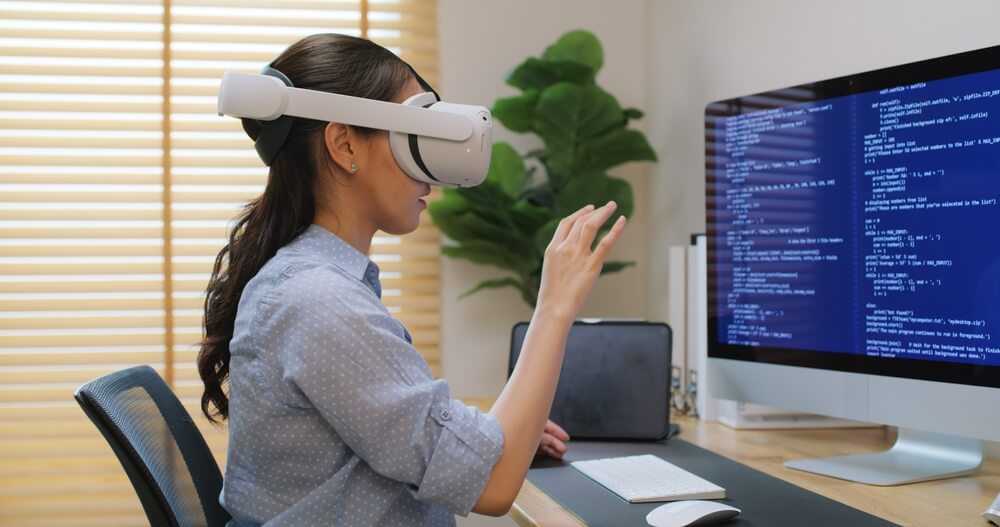
5 Common Problems with VR Training Solutions
Table of Contents:
Virtual reality (VR) training is excellent, but it also comes with challenges. Many companies are hesitant to fully adopt VR because of common VR training problems that can impact rollout and effectiveness. Recognizing these issues with VR training early on can help your organization avoid problems and create more effective, smoother training programs.
Key Takeaways
- High upfront costs and complexity:
VR training requires investment in hardware, software, and content creation, but costs are decreasing thanks to PaaS solutions and off-the-shelf modules. - User discomfort is a real concern:
Motion sickness, eye strain, and dizziness can limit training sessions. Ergonomic equipment, better design, and scheduled breaks help reduce these issues. - Integration challenges:
Connecting VR with LMS, HR, and IT systems can cause technical hurdles. Early IT involvement and cloud-based platforms simplify deployment. - Keeping content updated:
Outdated modules disengage learners. AI-driven VR training helps automate updates and ensure scenarios stay relevant and aligned with objectives. - Measuring training effectiveness:
Traditional assessments fall short in VR. AI analytics provide real-time insights into performance, skill gaps, and ROI to optimize programs. - Smart strategy is key:
Combining quality hardware, b content, seamless integration, and robust analytics allows companies to overcome VR challenges and achieve long-term success.
Top 5 Challenges Associated with VR Training
Before utilizing immersive technology, it is crucial to understand the potential setbacks. Even the most innovative solutions come with possible issues that can impact user experience, scalability, and return on investment (ROI). These are five common VR training challenges that organizations should be aware of.
1. Cost and Complexity of VR Training
One of the primary concerns for companies regarding VR training is the upfront investment in VR hardware, software, and content development. Good VR headsets, controllers, powerful computers, or standalone devices require a big budget. Creating immersive training content requires designers, developers, and subject matter experts. This combination of hardware and development costs can be daunting.
VR is still a new technology, and managing devices, licenses, and updates adds complexity. The learning curve can slow down implementation for companies without VR expertise.
VR costs are decreasing, and affordable VR training options are available. Off-the-shelf training modules and platform-as-a-service (PaaS) VR solutions allow companies to start small and scale up.
Investing in the right VR vendor, like Mazer, can help mitigate upfront costs and complexity.
2. User Discomfort and Motion Sickness
One of the most common issues with VR training is physical discomfort. This includes motion sickness, dizziness, eye strain, and headaches. Discomfort limits session length and learner engagement. Intensity varies depending on the individual, hardware, and design. Poor visual quality and rapid movement increase negative symptoms.
Choose ergonomic, high-performance VR equipment. Content should avoid unnatural movements and allow users to control it. Provide guidance, breaks, and gradual acclimation to virtual reality (VR). For instance, you can design the content to have slower movements and provide breaks every 20 minutes to reduce discomfort.
3. Technical Issues and Integration Challenges
VR training requires integrating existing systems, such as Learning Management Systems (LMS), HR platforms, and IT infrastructure. Many companies face challenges with VR training related to compatibility, bandwidth, and device management. Technical glitches and poor connectivity frustrate users. IT teams often lack VR experience.
Involve IT departments early in the planning phase. Select VR training solutions that offer easy integration and compatibility. Cloud-based VR platforms simplify deployment and maintenance.
4. Keeping Content Fresh and Up to Date
A major challenge in VR training is maintaining content relevance and alignment with goals. Outdated VR modules disengage learners and create knowledge gaps. Industries with frequent changes often struggle with maintaining content. Manual content updates are time-consuming and resource-heavy.
Generative AI in VR training can automate updates and create dynamic scenarios based on real-world data, enhancing the learning experience. AI-powered training keeps content fresh and aligned to objectives.
5. Measuring Training Impact
A significant issue with VR training is measuring its effectiveness and return on investment (ROI). Organizations struggle with tracking learner progress and skill acquisition.
Traditional assessments often fail to work effectively in immersive environments. AI-powered analytics in VR training platforms offer real-time insights.
Track performance trends, learner behavior, and knowledge gaps. Use data to optimize content and tailor training. Without measurement tools, companies underutilize VR training.
Read more about the Impact of VR Training Programs.
Conclusion
VR training offers significant opportunities but also presents challenges. Understanding the challenges of VR training—cost, discomfort, technology, content, and metrics—helps build a smart strategy. With the right approach—quality hardware, strong content, seamless integration, and smart analytics— companies can successfully implement VR training that drives results.
Need help overcoming VR training challenges? Our team delivers custom XR solutions tailored to your business needs. Contact us today.
Why is VR training considered expensive and complex to implement?
VR requires upfront investment in hardware, software, and content development. Managing devices, licenses, and updates also adds complexity. However, costs are decreasing with platform-as-a-service (PaaS) models and off-the-shelf VR modules, allowing companies to start small and scale gradually.
What causes motion sickness or discomfort in VR training?
Symptoms like dizziness, eye strain, and headaches are linked to poor design, rapid movement, or low-quality visuals. Using ergonomic, high-performance equipment, slowing content pace, and offering frequent breaks reduces discomfort and increases learner engagement.
What technical issues do companies face when adopting VR training?
Integration with LMS, HR systems, and IT infrastructure can be difficult. Compatibility, bandwidth, and device management issues are common. Early IT involvement and choosing cloud-based VR platforms simplify deployment and reduce technical barriers.
How can companies keep VR training content up to date?
Outdated modules disengage learners and reduce effectiveness. Generative AI can automate updates, create dynamic scenarios, and ensure content stays relevant. Regular updates aligned with business objectives maintain learner motivation and knowledge retention.
How can organizations measure the impact of VR training?
Traditional assessments don’t always fit immersive learning. AI-powered VR analytics track progress, errors, time on tasks, and learner behavior. These insights help optimize content, close skill gaps, and prove ROI to stakeholders.
How can companies overcome the main VR training challenges?
Solutions include choosing cost-efficient vendors, investing in ergonomic hardware, involving IT early, using AI for dynamic content updates, and leveraging analytics for measurement. With the right strategy, companies can unlock VR’s full training potential.

Author: Rafał Siejca
Rafal has over twenty years of corporate experience, including roles at Millennium Bank, Comarch, and leading software teams at PZU, one of Europe’s largest insurance companies. As one of Poland’s few true VR experts with a decade of experience, he ensures timely, high-quality project delivery as CEO and CTO.