
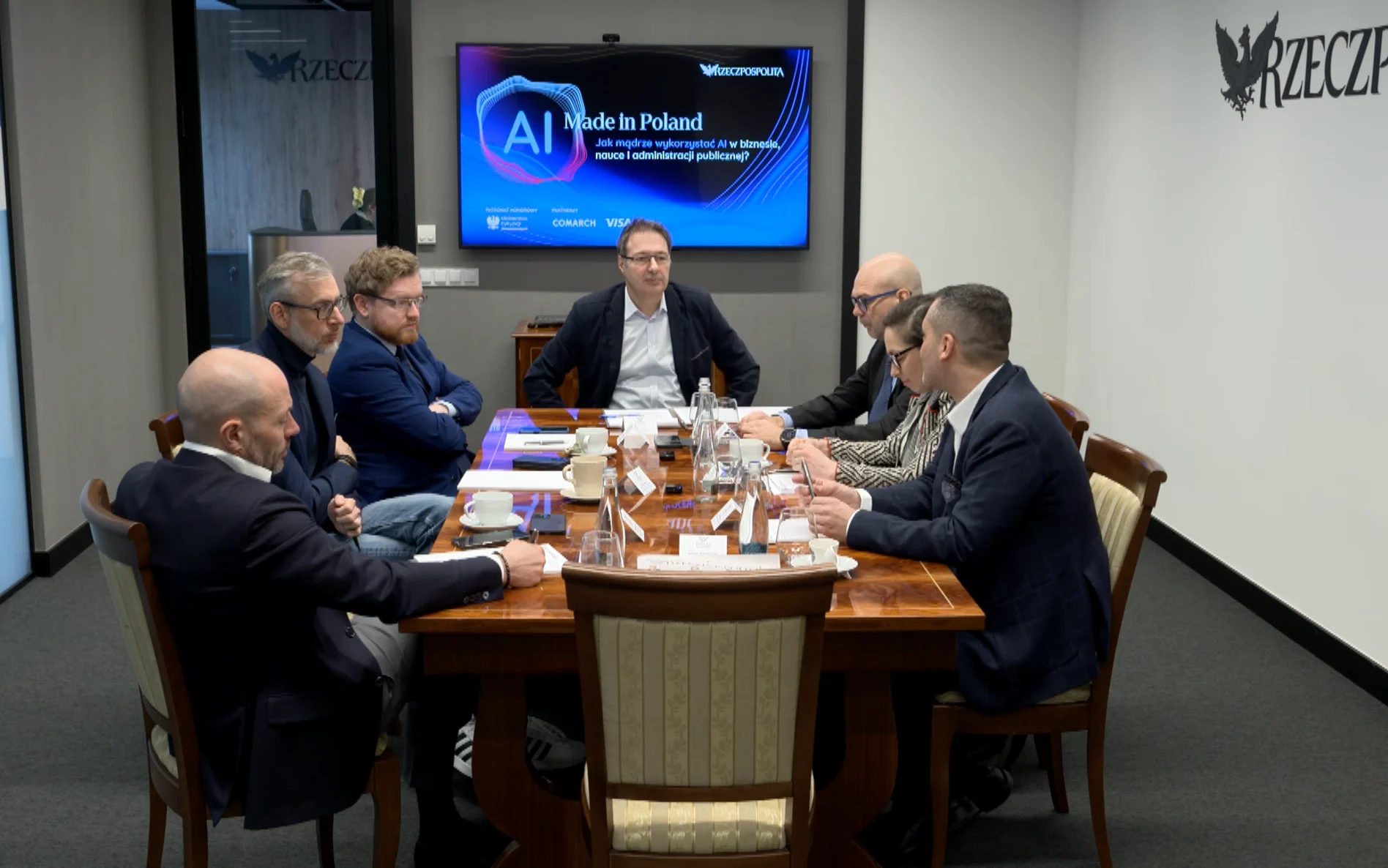
How to Wisely Use AI in Business, Science, and Public Administration?
Table of Contents:
Key takeaways:
- Thoughtful business automation: Artificial intelligence optimizes analytical and operational processes but requires a well-planned strategy.
- Expert perspective: Rafał Siejca, CEO of Mazer, reminds us that AI implementation initially increases a company’s operational costs, but it certainly pays off in the long run. However, we should not overestimate them. It is important to remember that AI models do not think abstractly.
- Breakthroughs in science: Algorithms accelerate the analysis of massive datasets, aiding efforts in areas such as rapid drug discovery and climate change modeling.
- Security in administration: Implementing AI in the public sector requires strict human-in-the-loop oversight to avoid algorithmic discrimination.
- New market skills: AI does not take jobs away as much as it changes their nature, requiring us to master the skill of precisely delegating tasks to machines.
It happened. Artificial intelligence has become the foundation of the modern economy. However, before we all let algorithms run our companies or government offices, we must ask ourselves a crucial question: how to implement these innovations responsibly and ensure real benefits.
Rafał Siejca, CEO of Mazer, offers a highly pragmatic perspective on this technological revolution. He points out a crucial fact that many technology enthusiasts often forget. In Rafał Siejca’s vision, current language models do not take away our intellectual work but radically accelerate it. The expert warns against the anthropomorphization of artificial intelligence. Today’s models cannot think abstractly. They are highly advanced machines for predicting the next most probable text or code tokens, but at the end of the day, they are still just computers and software.
To ensure technology actually serves our development, we must look at it through the lens of specific areas of our lives.
Business, Analytics, and Digital Evolution
Implementing AI in the private sector is something different than deploying simple chatbots on websites. Operational processes and customer service are being revolutionized by artificial intelligence right now. Modern enterprises use machine learning algorithms to predict consumer trends and optimize massive logistics systems.
In cities with a strong technological background, there is a clear trend of integrating AI with multilingual customer service automation processes within global business service centers. AI tools can analyze thousands of support tickets in milliseconds, helping specialists instantly categorize problems and prioritize the most critical ones. The key to market success is not replacing employees with bots on a massive scale but using AI to intelligently support teams and radically reduce response times to consumer needs.
However, we must remember the barrier to entry. As Rafał Siejca rightly points out in the context of small and medium-sized organizations, implementing dedicated AI solutions does not reduce costs at the outset; rather, it increases them. Creating a true AI agent that can receive a general task and independently arrange a plan for its execution requires immense knowledge and significant investment in IT infrastructure or appropriate services. Of course, such an investment is highly worthwhile in the long run, and there is no reason to put off these decisions.
Science Accelerates Thanks to Gigabytes of Data
It is in the world of science that artificial intelligence shows its most powerful and constructive potential. Algorithms can accomplish in days what once took research teams decades. A perfect example is molecular biology and medicine. AI systems can predict protein structures with unprecedented precision, paving the way for faster development.
AI also supports climatologists in modeling extreme weather events and astronomers in analyzing radio noise from distant galaxies. The machine doesn’t form its own hypotheses. Artificial intelligence in science is a brilliant assistant that can detect correlations hidden in terabytes of data, but the final interpretation of the results still belongs to the scientist.
Public Administration and Digital Responsibility
The public sector is governed by rules that are completely different from those of the business world. Here, the stakes are not financial profit but the trust and safety of citizens. Managers of state institutions face a strong temptation to fill staffing gaps by using systems that automatically issue administrative decisions.
Such a path hides great danger. Algorithms trained on historical data can easily replicate and amplify human biases. Therefore, the wise implementation of AI in public services must be based on strict human-in-the-loop oversight. An IT system can process funding applications, analyze city traffic, or optimize energy consumption in public buildings. However, a human official should make the final decision affecting a citizen’s life after prior verification.
The use of AI in these three key sectors makes one thing clear: we are on the threshold of a new era. The winners will be organizations that treat artificial intelligence not as a magic fix, but as a powerful analytical tool requiring wise, responsible human oversight.
At Mazer, we help businesses implement new solutions the right way: with proper architecture, security, and strategy built in from the start. Get in touch to learn how we can help your organization move forward with confidence.