
VR as a Change Management Tool: Preparing Teams for Digital Transformation
Table of Contents:
Key Takeaways:
- VR gives employees a consequence-free environment to practice new workflows and software before any live system is involved.
- Digital twins let staff walk through a future facility or interface before it exists, turning an abstract change into something tangible.
- Immersive role-play helps siloed teams understand each other’s operational reality during high-friction reorganizations.
- Behavioral telemetry from VR sessions gives change managers objective readiness data rather than self-reported survey responses.
In large-scale digital transformations, the technology itself is rarely what fails. The rollout plan, change communications, and budget are all scrutinized. What tends to get underestimated is the human side: employees who have spent years in established workflows and have no clear picture of what the new one looks like or whether they’ll be able to handle it.
Emails, town halls, and slide presentations don’t resolve that anxiety, because none of them make the future state feel real. Spatial computing does, and change managers are using VR to close the gap between announcing a transformation and executing one.
Making the Abstract Concrete
One of the most consistent drivers of resistance during digital transformation is that the future state remains abstract until go-live. Telling a factory floor manager that a new automated logistics system will change their daily routine doesn’t help them visualize it; it just makes the disruption feel unpredictable.
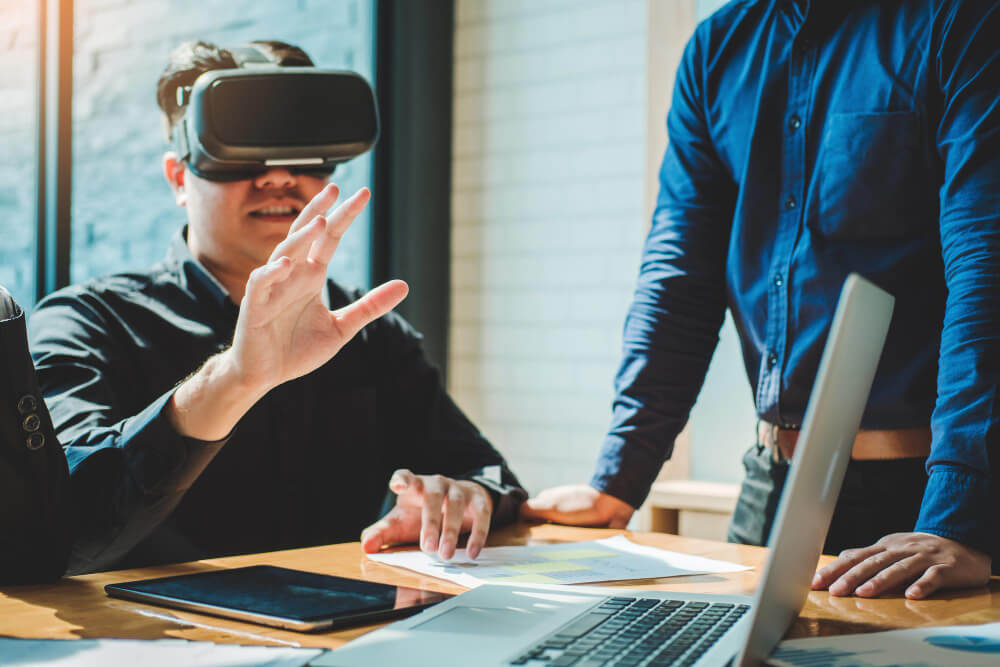
VR removes that ambiguity by letting employees experience the change before it happens. Using digital twin technology, organizations can build to-scale simulations of future facilities or software interfaces and let staff walk through them during the planning phase.
When employees can physically interact with a new process or workspace before it goes live, it stops being an unknown and becomes something they’ve already practiced. That shift, from something unpredictable to something already practiced, is where a significant portion of resistance dissolves.
Psychological Safety and Consequence-Free Practice
A major source of resistance during technology transitions is the fear of public incompetence. Tenured employees worry they won’t understand the new system, will make visible mistakes, and will look incapable to colleagues or management.
VR provides a sandbox environment that is disconnected from live systems. Employees can click the wrong buttons, follow the wrong sequence, and work through their uncertainty privately, without any of it touching actual operations or anyone else’s work.
This consequence-free practice environment accelerates genuine confidence rather than the performed confidence that comes from nodding through a training session. Research into how professional services firms are using VR for transformation consistently points to reduced anxiety and faster skill adoption when staff are given room to fail privately before going live.
Breaking Down Silos Through Shared Perspective
Departmental restructuring is one of the highest-friction elements of any major transformation. Teams that don’t understand why their workflows are being disrupted to benefit another department tend to resist, and often that resistance is reasonable from their vantage point.
VR creates a shared reference point that’s difficult to achieve through presentations or written communications. A logistics worker can spend time experiencing a customer service rep’s day, fielding complaints about the very delays their processes create. Teams from different offices can meet in a single virtual environment to build a new operational roadmap together rather than reviewing it in a document.
Research into VR and perspective-taking suggests that immersive role-play produces stronger cross-functional understanding than conventional empathy-building exercises. However, the strongest outcomes come when VR sessions are followed by facilitated discussion rather than used in isolation. Change managers can also use AI avatars to let team leaders practice handling emotional pushback from direct reports before those conversations happen in real life.
Using Behavioral Data to Make the Go-Live Decision
In traditional change management, completion rates for e-learning modules or self-reported confidence survey results typically determine when the workforce is ready to launch a new system. Neither tells you much about actual readiness.
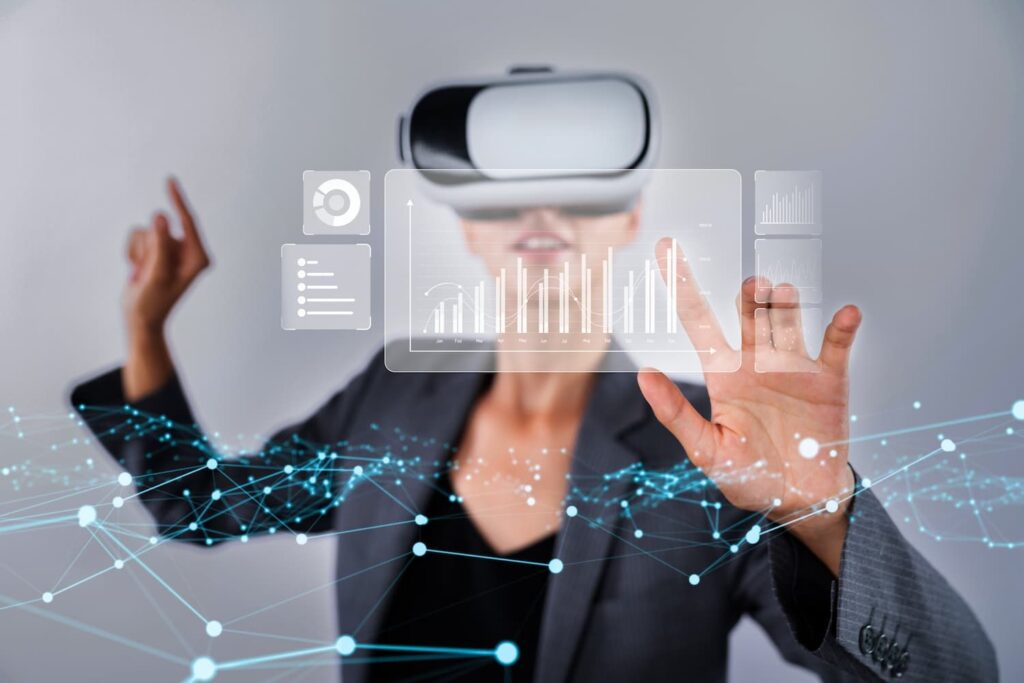
VR training sessions generate more useful data. Platforms track interaction patterns, time-on-task, error rates by task type, and hesitation before critical decisions. If a specific department is consistently struggling with one workflow, that shows up in the session data before anyone goes live.
Change managers who use this behavioral data to gate the rollout decision are replacing an educated guess with an evidence-based one, which is a meaningful shift in how transformation risk gets managed. If the data shows a department isn’t ready, the rollout gets targeted coaching rather than a delayed announcement and an anxious workforce.
Every transformation project has a point where the rollout is technically ready, but the workforce isn’t. If you’re approaching that stage and need a better way to assess readiness before go-live, get in touch with the Mazer team to discuss how a VR pilot could fit your timeline.
How do we justify the cost of VR for what might be a one-time change initiative?
Older employees are often the most resistant to new technology. Won’t VR make that worse?
Can VR be integrated with established change management frameworks like ADKAR or Kotter’s 8 Steps?

Author: Rafał Siejca
Rafal has over twenty years of corporate experience, including roles at Millennium Bank, Comarch, and leading software teams at PZU, one of Europe’s largest insurance companies. As one of Poland’s few true VR experts with a decade of experience, he ensures timely, high-quality project delivery as CEO and CTO.