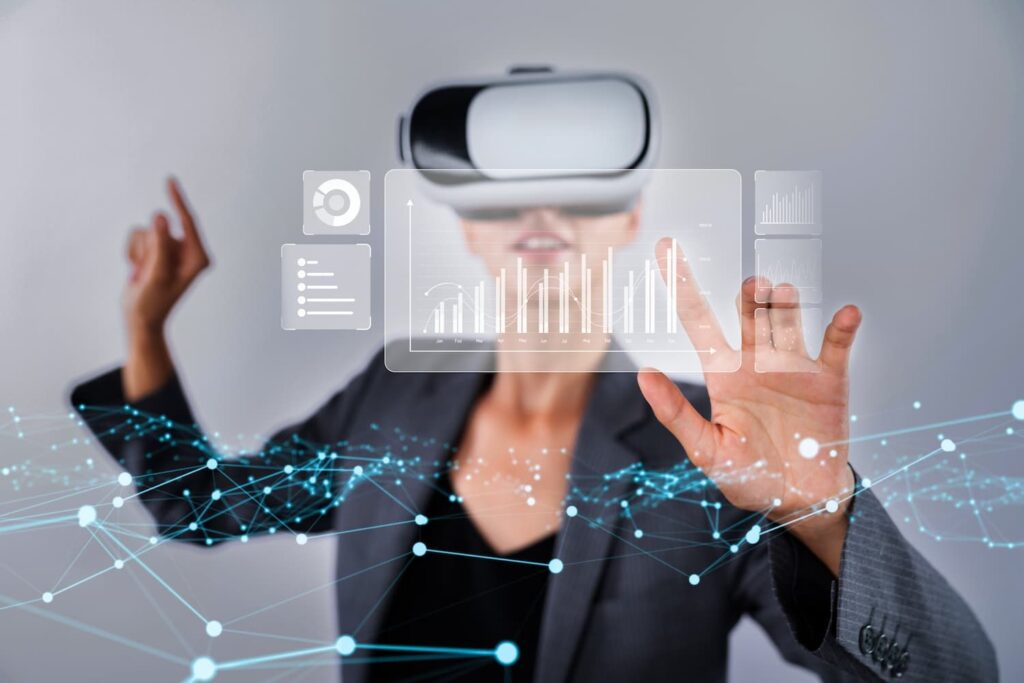

Why Now Is the Right Time for Training Companies to Invest in VR
Table of Contents:
Virtual reality (VR) technology gains momentum as a transformative tool. Industry trends, evolving client expectations, and compelling market data all point to the accelerating adoption of VR in training solutions. For training companies, now is the pivotal moment to invest in VR and capture the competitive edge.
Key Points
- Capitalizing on Industry Trends: Corporate learning is rapidly shifting from traditional classrooms to experiential, interactive learning. VR accelerates skill acquisition and improves knowledge retention by offering hands-on experiences in safe, simulated environments.
- Data-Backed Market Growth: Strong market projections and proven ROI (such as reduced error rates and faster onboarding) are driving businesses to allocate larger budgets toward immersive training, especially in safety-critical sectors like aviation, healthcare, and manufacturing.
- Meeting Evolving Client Demands: Modern clients are sophisticated and expect engaging, flexible, and highly personalized learning experiences. Offering custom-built VR courses positions training providers as essential partners in their clients’ digital transformation journeys.
- Overcoming Adoption Barriers: While cost and technical complexity are common concerns, training companies can mitigate these by utilizing user-friendly, end-to-end VR platforms and adopting a gradual rollout strategy to ensure high user acceptance.
- Securing a Competitive Edge: Investing in VR acts as a powerful strategic differentiator. Early adopters can capture market share by delivering scalable, consistent training with real-time learner analytics that traditional methods simply cannot match.
Industry Trends Favor VR Adoption
Corporate learning and development is evolving rapidly. Immersive technologies, such as VR, are now practical tools that are reshaping how employees engage with training materials. Increasingly, companies are moving away from traditional classroom settings toward experiential learning, where VR shines by offering interactive, hands-on experiences within safe, simulated environments.
Training companies that recognize the trend toward scalable, engaging, and effective learning solutions are aligning their offerings with VR-based programs. This shift is supported by evidence showing how VR can accelerate skill acquisition and improve knowledge retention compared to conventional methods. The scalability of VR training programs, combined with the ability to deliver consistent experiences across geographies, makes it a compelling choice as organizations expand their workforce development initiatives.
Market Data Confirms Growing VR Training Demand
Recent market research illustrates strong growth projections for VR in training and education. Businesses increasingly allocate budgets toward immersive learning technologies, driven by the demonstrated improvements in training outcomes and cost savings over time.
The demand is particularly high in industries that require high safety standards, precise technical skills, and rapid employee upskilling, such as aviation, healthcare, manufacturing, and financial services, among others. Training providers who invest now in VR technologies can capitalize on this increasing appetite and establish themselves as leaders in immersive learning.
Detailed analyses of the ROI of VR training programs reveal how early investments translate into long-term financial benefits, including reduced error rates, faster onboarding, and fewer training repetitions. Effective measurement techniques to track the impact of these programs further build client confidence, emphasizing that VR is an investment with measurable returns.
Shifting Client Expectations
Clients are becoming more sophisticated in their training requirements. They seek engaging, flexible, and personalized learning experiences, attributes that VR excels in. The rise of digital transformation initiatives across sectors has heightened awareness of innovative training options.
Many forward-thinking organizations now expect their training partners to offer VR solutions that can be customized and scaled, incorporating real-world scenarios that prepare employees for their specific roles. This has increased the urgency for training companies to build or expand competencies in VR course design and delivery.
Offering custom VR training courses enables companies to tailor learning paths and address the unique needs of their clients more effectively. Platforms designed to simplify custom VR course creation empower training providers to develop solutions that stand out in a crowded marketplace.
Overcoming Barriers and Leveraging Opportunities
Despite VR’s clear advantages, some training companies remain cautious, often citing concerns about cost, complexity, or technology adoption. However, proven implementation strategies demonstrate that well-supported VR programs can be deployed efficiently with strong user acceptance.
Focusing on a gradual rollout, aligning content with client goals, and leveraging platforms that offer end-to-end solutions reduces the burden typically associated with adoption. Case studies from successful VR implementations show how companies have addressed these challenges and benefited from a smooth transition to immersive training.
Training companies can also look to advanced VR learning systems, which provide sophisticated tools for content management and learner analytics, helping to optimize training outcomes.
Competitive Differentiation
Investing in VR today positions training companies ahead of competitors who still rely solely on traditional methods. As organizations seek to future-proof their workforce, VR represents not only a learning enhancement but a strategic differentiator.
Training providers offering VR have the advantage of delivering learning at scale with consistency, tracking real-time progress, and providing personalized experiences. These capabilities resonate with clients seeking to maximize their return on training investments and enhance workforce readiness.
Furthermore, exploring trends and technologies in advanced XR training platforms can help companies stay at the forefront of immersive learning innovation.
Conclusion
With industry trends signaling rapid adoption, market demand surging, and client expectations rising, training companies face a clear opportunity to invest in VR. Early adoption enables providers to build expertise, refine offerings, and capture market share before competitors.
Making strategic investments in VR technology and associated course development capabilities today ensures that training companies remain relevant and competitive in a rapidly transforming industry. Those who move swiftly stand to benefit from increased client trust, improved training outcomes, and sustained business growth.
Why is there a growing demand for VR in corporate training?
The demand is driven by VR’s ability to offer experiential, hands-on learning in safe, simulated environments. It significantly accelerates skill acquisition, improves knowledge retention, and provides long-term cost savings compared to traditional classroom methods.
What do modern organizations expect from their training partners?
Clients today seek engaging, flexible, and customized learning experiences. They expect training companies to offer innovative, scalable VR solutions that can replicate real-world scenarios specifically tailored to their workforce’s unique roles.
Which industries are driving the most demand for VR training solutions?
Demand is particularly high in industries that require strict safety standards, precise technical skills, and rapid employee upskilling. This includes sectors such as aviation, healthcare, manufacturing, and financial services.
How can training companies overcome the perceived barriers to adopting VR?
Companies can overcome concerns about cost and complexity by utilizing end-to-end advanced VR learning systems, focusing on gradual rollouts, and aligning content closely with client goals to ensure smooth implementation and strong user acceptance.
Why does offering VR training provide a competitive advantage?
Investing in VR serves as a strategic differentiator. It allows training providers to deliver consistent, scalable learning experiences while providing advanced learner analytics and personalized paths that competitors relying solely on traditional methods cannot match.

Author: Rafał Siejca
Rafal has over twenty years of corporate experience, including roles at Millennium Bank, Comarch, and leading software teams at PZU, one of Europe’s largest insurance companies. As one of Poland’s few true VR experts with a decade of experience, he ensures timely, high-quality project delivery as CEO and CTO.