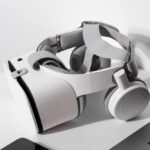

VR tracking: what it is and how it works
Table of Contents:
Key Points
- Tricking the Brain with Stereoscopy: VR headsets create a 3D effect by using a screen split into two parts. Each eye sees a slightly different, curved image through specialized lenses. This “stereoscopic” approach mimics natural human vision, convincing the brain that it is looking at a three-dimensional world rather than a flat display.
- Rotational vs. Positional Tracking (3DoF vs. 6DoF): The level of immersion depends on the “Degrees of Freedom.” Basic 3DoF tracking (common in mobile VR) only captures head rotation—looking up, down, or sideways. Advanced 6DoF tracking captures both rotation and physical movement through space, allowing you to walk, duck, or lean within the virtual environment.
- The Role of Internal Sensors: To match your real-world movements with the virtual image, headsets utilize an Inertial Measurement Unit (IMU). This system combines accelerometers to measure speed, gyroscopes to track orientation, and magnetometers to maintain a consistent sense of direction, ensuring the virtual horizon remains stable.
- Interaction through 6DoF Controllers: Modern tracking technology isn’t limited to the headset. 6DoF controllers use optical or infrared sensors to track the exact position of your hands in 3D space. This allows for direct interaction, enabling users to reach out, pick up, and manipulate virtual objects with natural hand movements.
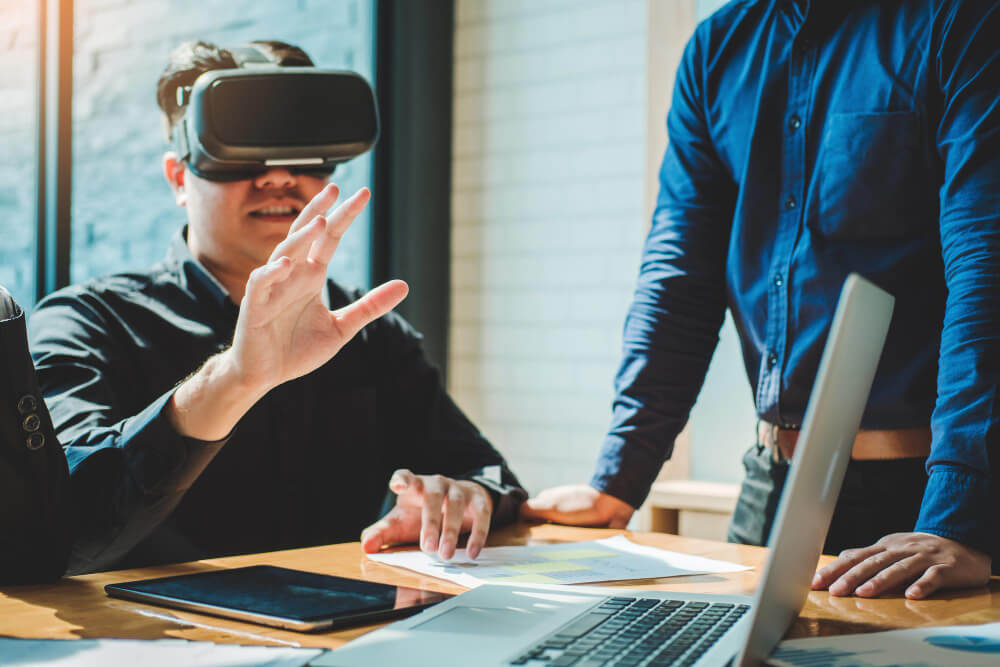
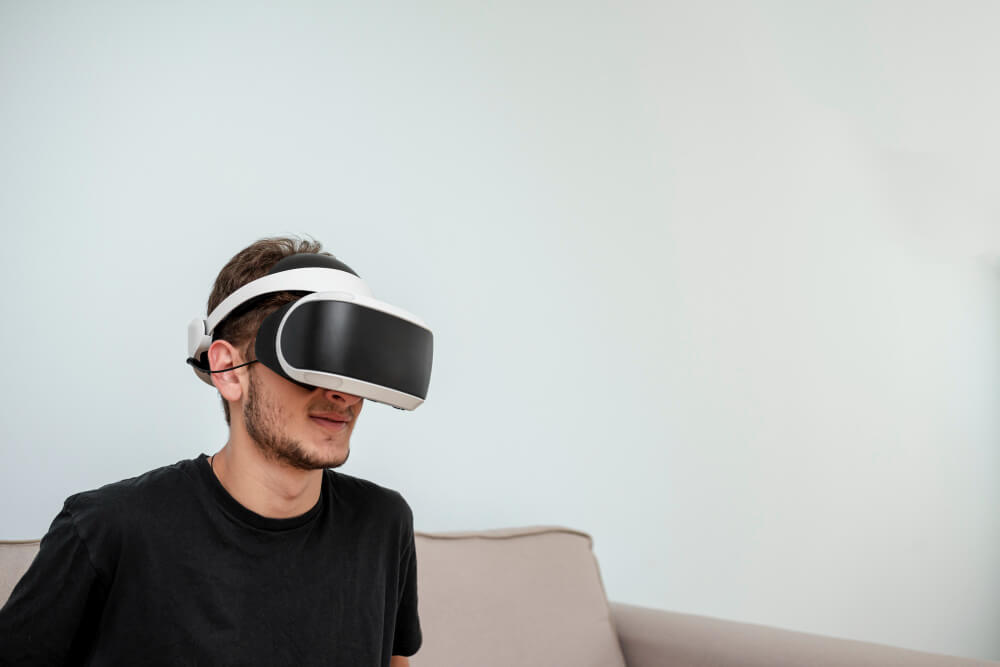
Virtual reality is a technology that continues to grow in popularity every year. Nowadays, there are several models of VR (Virtual Reality) headset designed for PCs, games consoles, and smartphones available on the market. This equipment gives the user the impression of being in a digitally generated virtual world and allows them to interact with it and within it. Virtual reality headsets literally enable you to move to another world. But how is this possible? What technology stands behind it? What is VR tracking, and how does it work? All of these questions are answered in this article, so read on to find out more.
How do VR headsets work?
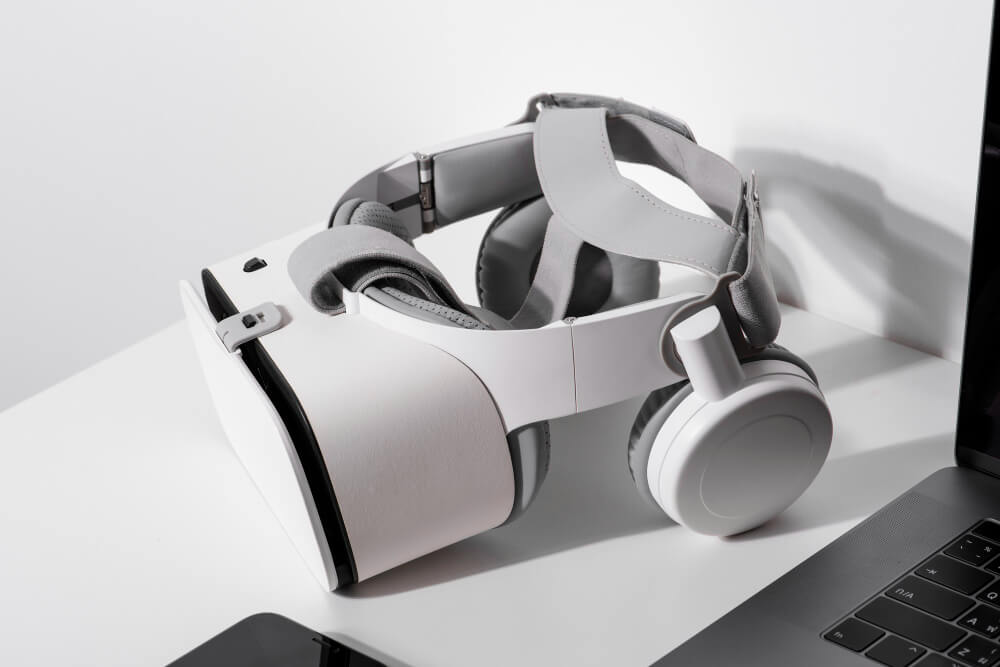
One of the most critical components of a VR headset is the goggles. They present users with images generated by devices such as computers, consoles, and even smartphones. For them to work correctly, a screen divided into two parts is required as this is what can “trick our brain” into seeing the 3D virtual image correctly. This deception is based on the fact that each screen displays a similar image that is shifted in relation to the other. The curvature of the pictures is created using special lenses so that, as the image enters the eye, the brain perceives it as 3D.
However, viewing the 3D image on its own is far from exciting. Therefore, VR headsets offer many more possibilities through sensors such as accelerometers, gyroscopes, magnetometers, and controllers. They deepen the impression of three-dimensionality because they track the movement of the head and body. This facilitates enormous freedom of movement while using VR hardware that, combined with the almost complete isolation from the real world the headset provides, allows us to look around in virtual reality and even perform tasks within it.
VR tracking – what is it?
Virtual reality headsets differ from regular 3D displays in that they have a wide field of view, within which they have positional tracking. This allows those using VR goggles to lean, sway, and even walk while using them. However, it is worth mentioning that most mobile VR headsets only have rotational tracking (3DoF). This allows you to look up, down, left, and right, and to tilt your head, and, as long as you don’t try to move your head too fast, it will all be tracked. As a result, the entire virtual world moves with you. To be more precise, 3DoF tracks rotational movements around the x, y, and z axes. In this way, 3DoF only follows the viewing direction (e.g., up/down, left/right) but does not track your position as you move around the room.
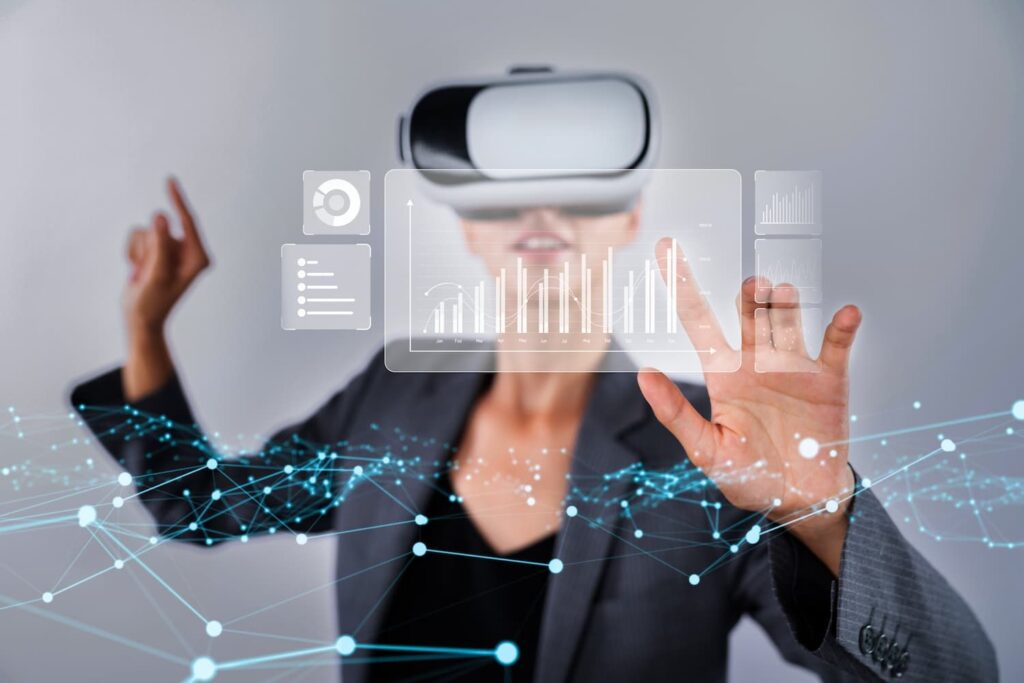
However, the possibilities of VR don’t end there. Modern VR headsets offer improved experiences that support positional tracking (6DoF), allowing the user to move around in the virtual environment. If the tracking performance is good enough, you can even walk around the room in VR. Some controllers also use 6DoF, so you can directly interact with virtual objects using your hands. For example, you can move items in virtual space by using your hands in the real world.
VR tracking – how does it work?
Rotational tracking (3DoF) is made possible through the use of miniature electromechanical gyroscopes, but the technologies used for positional tracking (6DoF) vary from company to company. These types of devices “know” if the user has moved left, right, forwards, or backwards, and if they have squatted down or stood up. Through the use of such technology, we can move around the virtual world however we want.
At the moment, there is no single consistent standard in use across all VR goggles, largely due to the cost. Most mobile VR headsets use an inertial measurement unit (IMU) sensor to read orientation. This is the same sensor that changes the orientation of the screen when watching a video on a cell phone. 6DoF tracking, on the other hand, requires more advanced systems – either infrared or optical – to monitor specific points on a headset or controller in 3D space. In exchange for this enhanced range of capabilities and functionality, it logically follows that we have to pay more, and this is what has caused this variety in the technology.
VR tracking – the technology of the future
Today, with VR tracking, users can gain a whole new dimension of experience. Instead of passively observing, they can participate in events and even have an impact on how they progress, all the while with their mind perceiving them as real experiences. Thanks to the continuous development of VR, today, this technology is successfully being used, not only in the entertainment sector, but also in education, medicine, the military, and commerce. And there is no doubt much more to come from VR technology, so it is well worth following any new applications that enter the market and adopting any new techniques and practices that might come along to make sure that you and your business stay ahead of the curve.
Read also: What Is Augmented Reality
How do VR headsets trick the brain into seeing 3D?
VR headsets use a screen divided into two parts, with each part displaying a slightly different image shifted in relation to the other. Combined with special curved lenses, this setup mimics how our eyes perceive depth, tricking the brain into seeing a 3D virtual environment.
What is the difference between 3DoF and 6DoF tracking?
3DoF (Three Degrees of Freedom) only tracks rotational movements—allowing you to look up, down, and sideways. 6DoF (Six Degrees of Freedom) adds positional tracking, meaning it also detects if you move forward, backward, or squat, allowing you to physically walk through the virtual world.
How does VR positional tracking actually work?
While basic rotation is tracked by gyroscopes, 6DoF positional tracking uses more advanced infrared or optical systems. These systems monitor specific points on the headset and controllers in 3D space, translating your real-world movements into the virtual environment in real-time.
Are VR sensors like those in smartphones?
Yes, many mobile VR headsets use an Inertial Measurement Unit (IMU), which includes accelerometers and gyroscopes similar to those used in smartphones to change screen orientation. However, PC and console VR systems use much more sophisticated external or internal camera-based sensors for higher precision.

Author: Rafał Siejca
Rafal has over twenty years of corporate experience, including roles at Millennium Bank, Comarch, and leading software teams at PZU, one of Europe’s largest insurance companies. As one of Poland’s few true VR experts with a decade of experience, he ensures timely, high-quality project delivery as CEO and CTO.