Most Impactful VR Training Trends of 2025
Table of Contents:
VR is an exciting field to observe, mainly due to how novel the technology is and its inherent potential to completely reimagine how we operate in our day-to-day lives. When discussing VR training trends likely to make a splash this year, things like AI integration, broader adoption, and increased affordability and adoption spring to mind immediately. But what else does the future of VR learning hold? Keep reading to find out!
Key Points:
- Explosive Market Growth: The global VR industry is projected to reach a valuation of at least $65.5 billion. This signals a critical shift from an emerging novelty to a highly scalable, foundational tool for organizational learning.
- AI-Powered Personalization: The integration of Artificial Intelligence is set to revolutionize VR training. AI enables dynamic, adaptive environments that tailor learning scenarios specifically to the unique needs of the business and the individual employee.
- Expansion Across Diverse Industries: VR is rapidly moving beyond its traditional roots in gaming and aerospace. Its proven advantages are driving broader adoption across healthcare, manufacturing, and general corporate L&D programs.
- Lowering Barriers to Entry: As VR technology and hardware continue to evolve, costs are steadily dropping. This increased affordability is making immersive training accessible not just to massive enterprises, but to smaller businesses and educational institutions as well.
- Next-Level Immersion via Gamification and Haptics: The future of VR relies on gamification (leaderboards, scoring) to boost friendly competition and engagement. Additionally, breakthroughs in haptic feedback technology will soon allow trainees to feel physical textures and resistance, blurring the line between simulation and reality.
The Future of VR Learning & Education: Market Projections
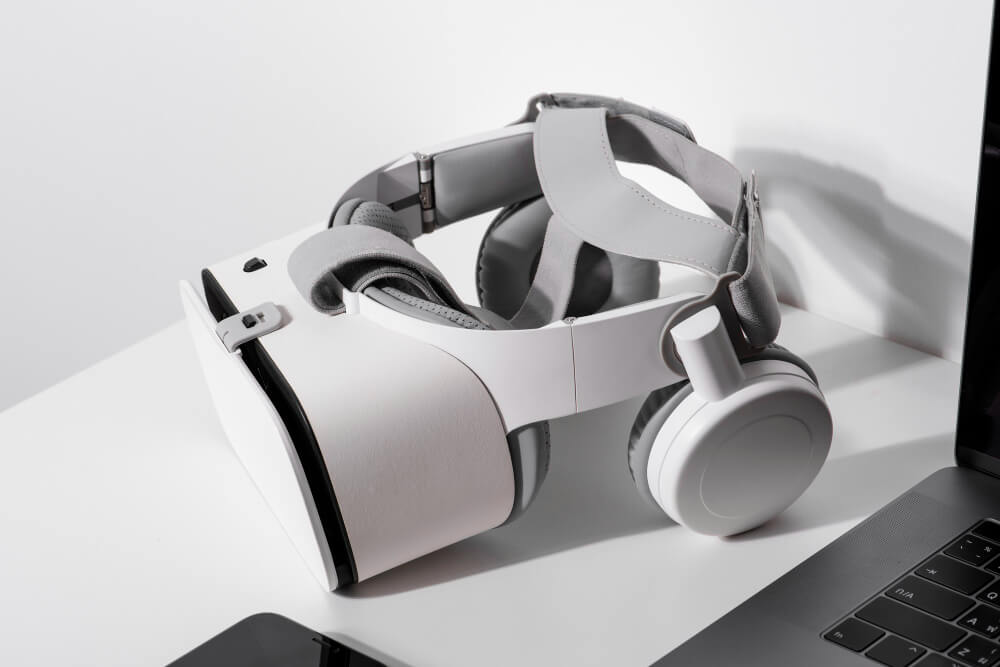
One of the major hurdles of VR today concerns its limited accessibility. VR headsets are expensive and bulky, and most often, dedicated VR rooms are required to properly set up all the hardware without bumping into or knocking over anything.
Still, the popularity of immersive learning will only keep growing – at least, according to market analysts. As mentioned in another article on the VR education market, market researchers predict that the global VR industry will reach a valuation of at least $65.5 billion, and that’s a conservative estimate.
As more money pours into the industry, VR training is approaching a critical turning point. The VR training trends emerging now aren’t just passing phases. Instead, they’re going to shape the foundation for the next stage of growth and make VR learning more scalable, accessible, and effective.
VR Training Trends: What to Look Out For?
Without further ado, let’s dive into the juiciest trends in the VR and XR market that are worth watching in 2025:
AI Integration
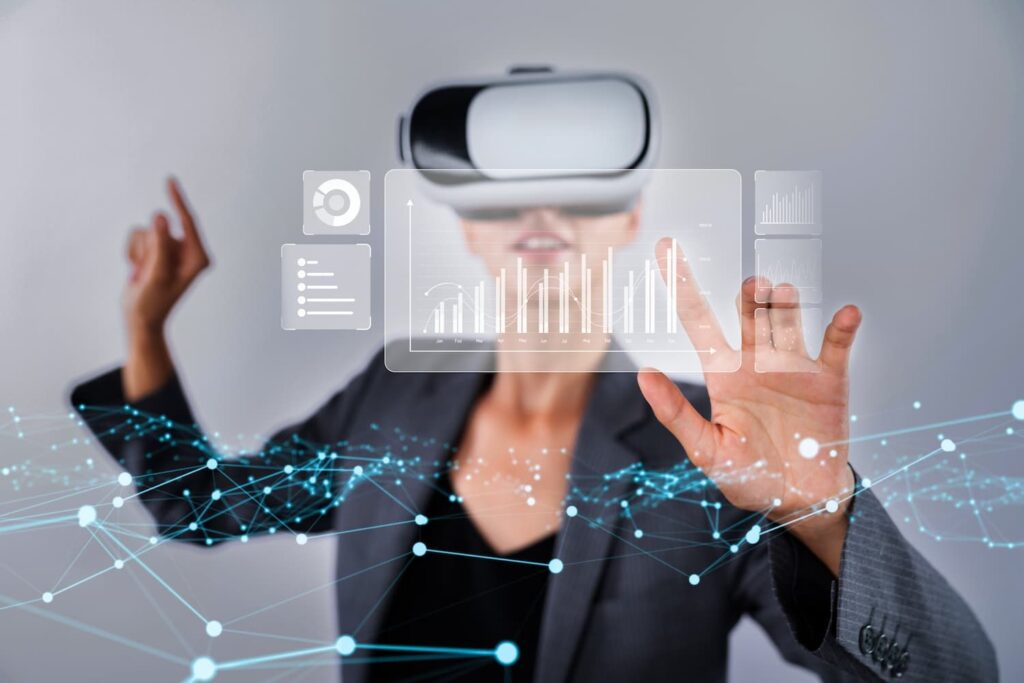
In the very short time it’s been with us, AI has burst onto the global stage, turning everyone’s heads and making a big show for all to see. Its potential seems really palpable, and the VR use case is no different. Using AI to make VR training more adaptive and personalized will certainly be among the key trends in 2025 as companies gain more freedom to adjust training scenarios to their own needs and to the needs of their workforce.
Read how we implement AI-powered training into our proprietary VR technology here: The Future of Training: VR and AI with Mazer Trainer.
Broader Adoption
As VR technology continues to evolve, its adoption is expanding beyond tech-heavy industries like gaming and aerospace. Today, more sectors, like healthcare, manufacturing, and corporate training, are increasingly integrating VR into their learning programs. The advantages of these systems are clear, and their presence is only going to grow.
Increased Affordability
With technological advancements, VR headsets and platforms are becoming more affordable. At this point, it seems inevitable that costs will continue to drop,lowering the barrier to entry and allowing smaller businesses and educational institutions to take advantage of VR training’s wonders.
Gamification and Immersive Simulation
As a standalone solution, virtual reality greatly enhances learning capabilities owing to how real it can feel. However, introducing gamification (that is, game-like elements meant to incentivize learning even further) can make practice even more effective and fun. With strategies like point scoring, leaderboards, and rewards, employees can enjoy a friendly bit of competition while still practicing hard skills in risk-freeenvironments to gain confidence and excel at their roles.
Enhanced Haptic Feedback
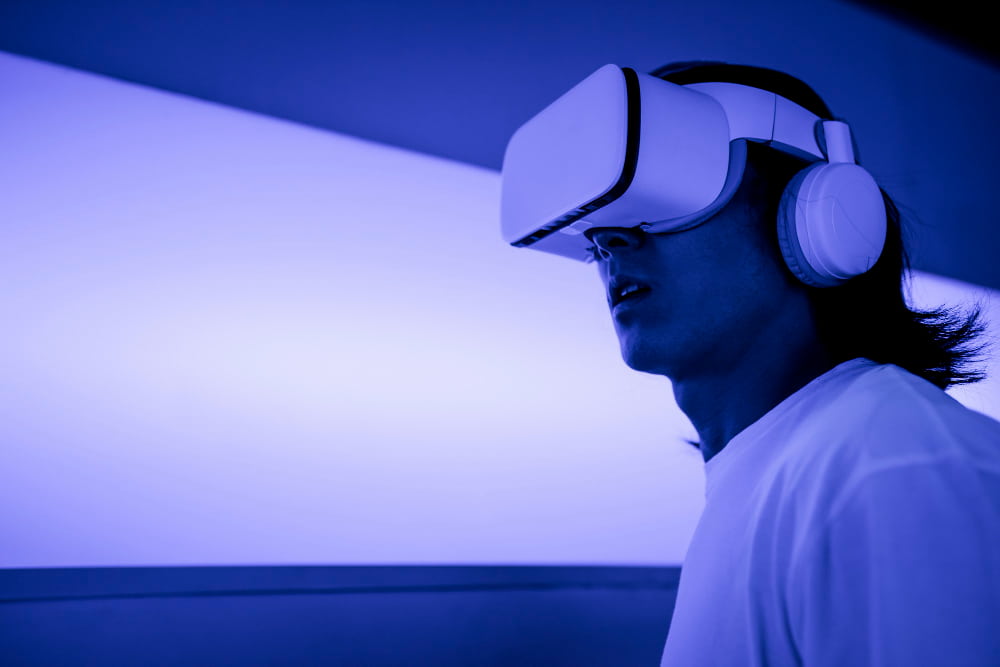
Think VR was already immersive? Think again because there is a lot more room to grow. Advancements in haptic technology are enabling more immersive VR training experiences by simulating the sense of touch. This allows trainees to feel textures, vibrations, and resistance.
The Takeaway
The future of VR training is certainly a bright one, and we’re nothing but excited. VR has the potential to revolutionize entire industries, and Mazerspace is ready to be at the forefront of these changes. Contact us today if you want to partner up with us and experience how our cutting-edge VR learning centers can give your organization’s training efforts a complete makeover.
What is the projected market growth for the VR industry?
Market researchers project that the global VR industry will reach a valuation of at least $65.5 billion. This massive influx of investment marks a turning point, making VR learning more scalable, accessible, and effective than ever.
How will AI integration change the future of VR training?
AI will make VR training highly adaptive and personalized. It allows companies to dynamically adjust training scenarios to fit their specific operational needs and match the individual learning pace of their workforce.
Is VR training only useful for tech-heavy industries?
No, VR adoption is expanding rapidly. While it started in sectors like gaming and aerospace, it is now being widely integrated into diverse fields such as healthcare, manufacturing, and general corporate training programs.
Will VR training become more affordable for smaller businesses?
Yes. As technological advancements continue, the costs of VR headsets and platforms are dropping. This lowered barrier to entry allows smaller businesses and educational institutions to easily leverage the benefits of immersive training.
How do gamification and haptic feedback improve VR learning?
Gamification introduces game-like elements (such as points and leaderboards) to make learning fun and competitive. Enhanced haptic feedback takes immersion a step further by simulating the sense of touch, allowing users to physically feel textures, vibrations, and resistance in the virtual world.

Author: Rafał Siejca
Rafal has over twenty years of corporate experience, including roles at Millennium Bank, Comarch, and leading software teams at PZU, one of Europe’s largest insurance companies. As one of Poland’s few true VR experts with a decade of experience, he ensures timely, high-quality project delivery as CEO and CTO.