Virtual Reality for Prototyping
Table of Contents:
Key Points
-
Digital Twins Replace Physical Models: VR prototyping involves creating a digital replica of a product, allowing for extensive testing in simulated environments before committing to physical manufacturing.
-
Significant Cost Reductions: By eliminating the need for early physical prototypes, businesses can drastically cut down on expensive materials and valuable engineering time.
-
Early Flaw Detection: Testing virtual models under various conditions helps developers spot and resolve design errors early on, resulting in a higher-quality final product.
-
User-Centric Customization: VR enables real target users to interact with the prototype, providing invaluable behavioral insights (like the Oral-B case study) to tailor the product perfectly to customer needs.
-
Strong Competitive Edge: Early adoption of VR prototyping is a strategic investment that allows companies to streamline innovation and stay significantly ahead of market competitors.
Prototyping in virtual reality takes product design and development to the next level. It enables the developers to see how the users will interact with a given product before spending resources on preparing a physical prototype. As a result, it leads to better products being created at lower costs. Do you want to learn more? Then, keep reading.
VR Prototyping – A Revolution in Product Design
Creating the best product or service requires effort – from conceptualizing to preparing a prototype that can be tested. The whole process takes both time and money, especially if you want to offer products that truly match the needs of their final users – your customers. But what if we told you that it could be a bit easier?
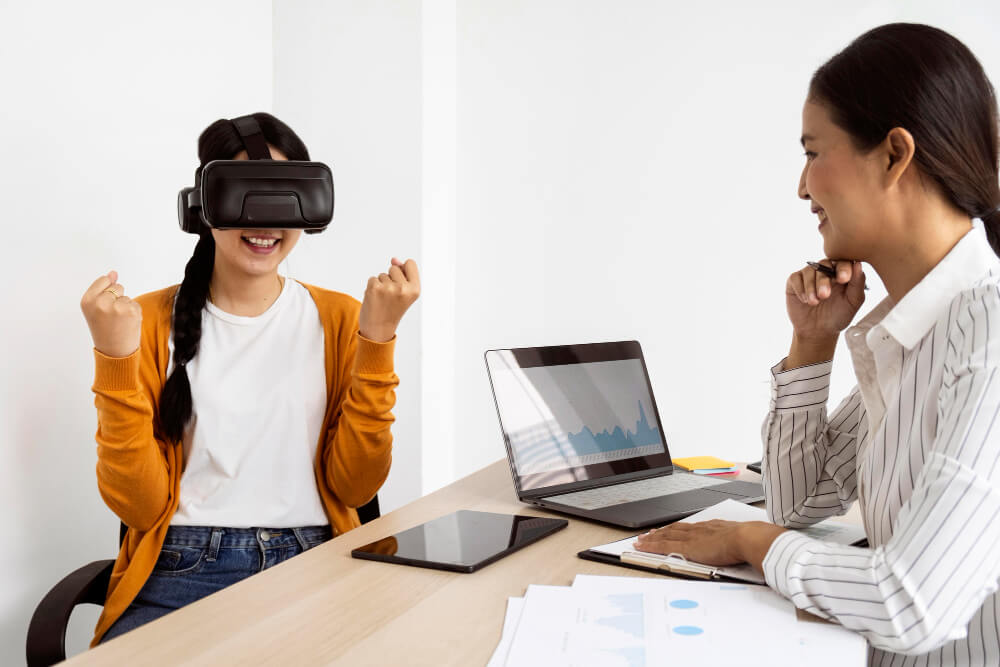
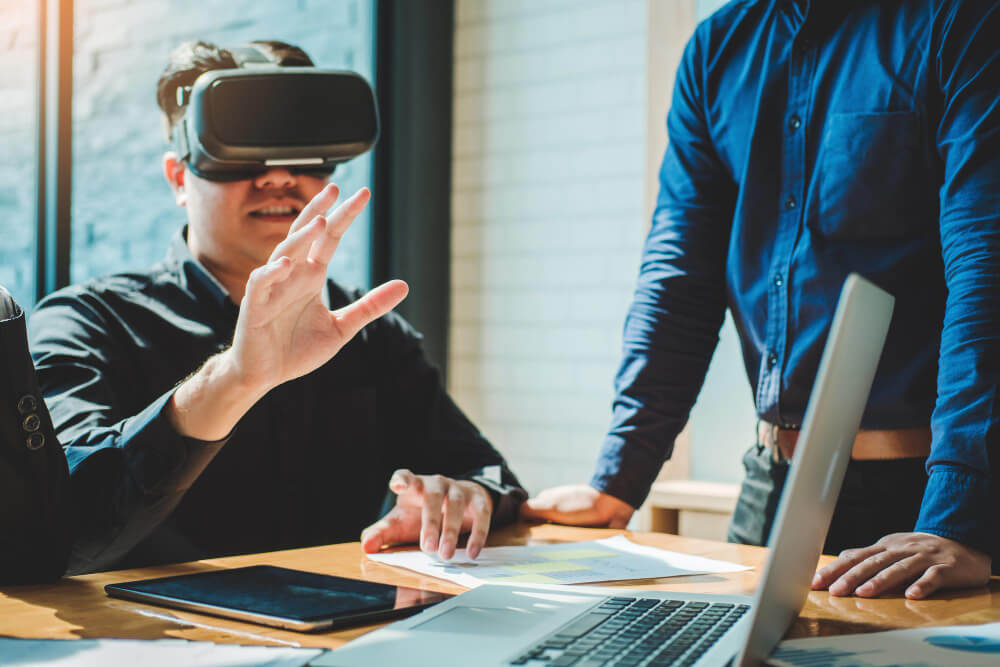
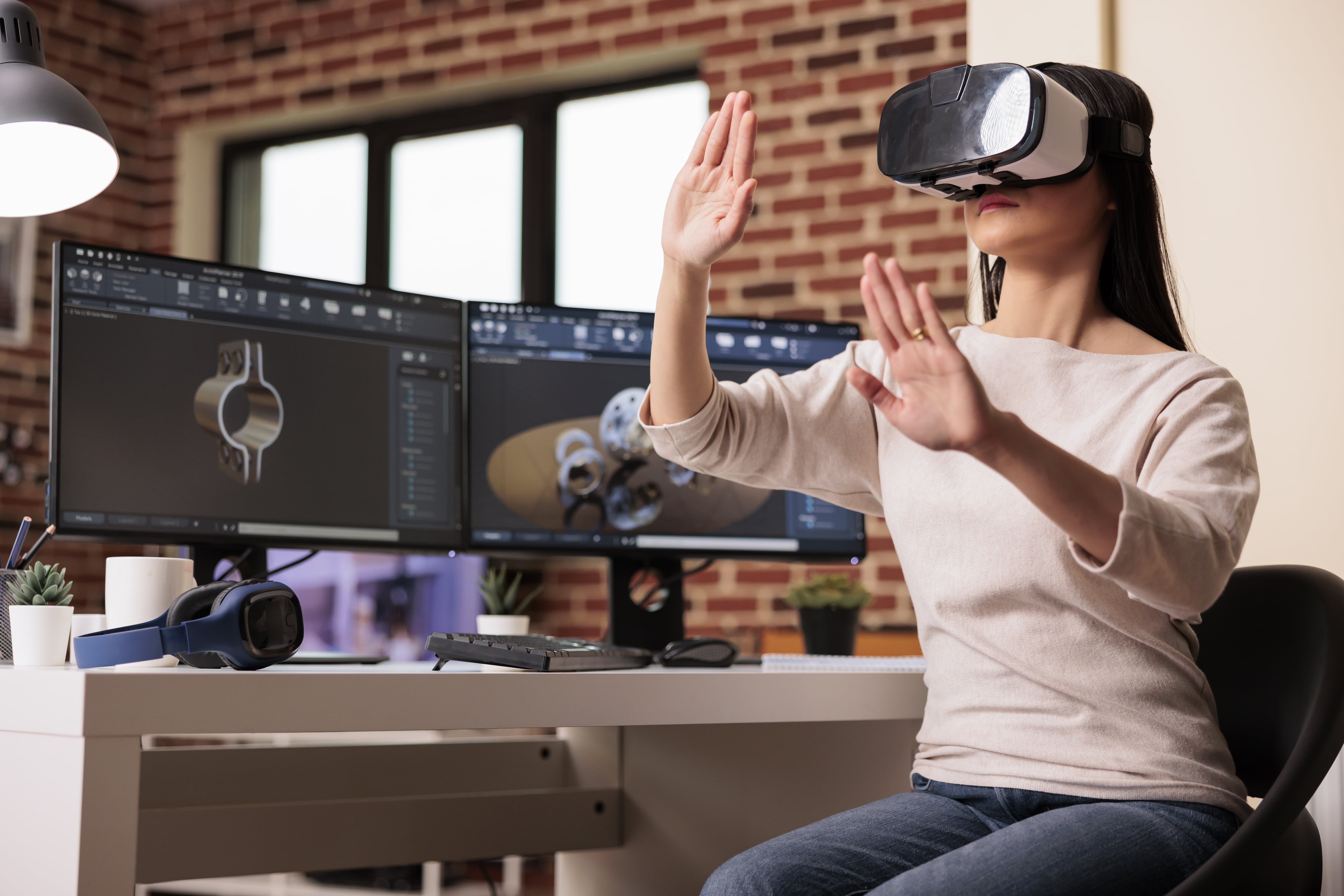
Virtual reality prototyping is the approach that aims to reduce the amount of resources needed for a perfect product design. The principles behind it are quite simple: before manufacturing the product or putting the service to life, a kind of digital twin is created in virtual reality. Then, the model is tested under different conditions (which can be simulated in the VR) and often by a study group of the desired final users. As a result, modifications to the product (or service) design can be made without the need to develop the first version of it in the physical world.
Check also our article about VR training.
The Advantages of Using VR for Prototyping
Using virtual reality for prototyping naturally comes with a few benefits for businesses. Let’s look at them now.
Lower Design Costs
Building a physical model of your product and testing it is almost always expensive – it consumes the time of your engineers and the money required for the materials. When prototyping in VR, this is no longer a problem – you just need to model the design in virtual reality, and you can start the tests.
This is particularly important for products that use advanced, costly elements, such as embedded systems. Naturally, this use of VR in retail, such as clothing, won’t yield large savings.
Improved Product Quality
With a digital model of your product, one that can be tested by various users from the target group, you are able to spot any design flaws early on. As a result, you may modify the product, releasing a better first version on the market.
Will VR prototyping help you avoid any errors or flaws? Naturally, no. However, it should reduce their number, especially since you can test the models in different environments.
Creating a Unique Value Proposition Tailored to the Needs of the Users
Have you heard the history of Oral-B and how they became the leader in children’s toothbrushes? Let us brief you. By observing the way adults and kids brush their teeth, Oral-B has found a major difference in the way these two groups hold their toothbrushes – kids with whole fists while adults with their fingers. The company used this knowledge to create children’s toothbrushes that had handles adjusted to this trend, and… their sales skyrocketed.
Why did we introduce this short story? It shows how important it is to understand the needs of your customers, and VR prototyping enables you to do that. By creating a fully virtual prototype and testing it on the members of your target market, you can observe their interactions and modify the product to meet their needs. Like Oral-B, you can become a leader of your segment – all without even creating the first physical model of your product.
The Takeaway
Virtual reality prototyping opens a set of new opportunities for businesses. The sooner you introduce it in your company, the larger the edge you will gain over your competitors. Hence, we advise you to put it on top of the list of your investments and see for yourself what benefits it can bring to your organization.
You might also read: Why Businesses Need to Consider VR As Their Top Investment Choice
What is virtual reality prototyping?
Virtual reality prototyping is the process of creating a digital twin of a product or service in virtual reality. It allows developers to test the model under various simulated conditions with study groups before spending resources on physical manufacturing.
What are the main advantages of using VR for prototyping?
The main advantages include lower design costs by saving time and materials, improved product quality through early detection of design flaws, and the ability to create a unique value proposition tailored directly to user needs.
How does VR prototyping help create better products for customers?
By testing a fully virtual prototype with members of the target market, businesses can observe how users interact with the product. This allows developers to modify the design to perfectly meet customer needs without needing to create a physical model first.

Author: Rafał Siejca
Rafal has over twenty years of corporate experience, including roles at Millennium Bank, Comarch, and leading software teams at PZU, one of Europe’s largest insurance companies. As one of Poland’s few true VR experts with a decade of experience, he ensures timely, high-quality project delivery as CEO and CTO.