
Using Virtual Reality for Brand Marketing & Product Showcasing
Table of Contents:
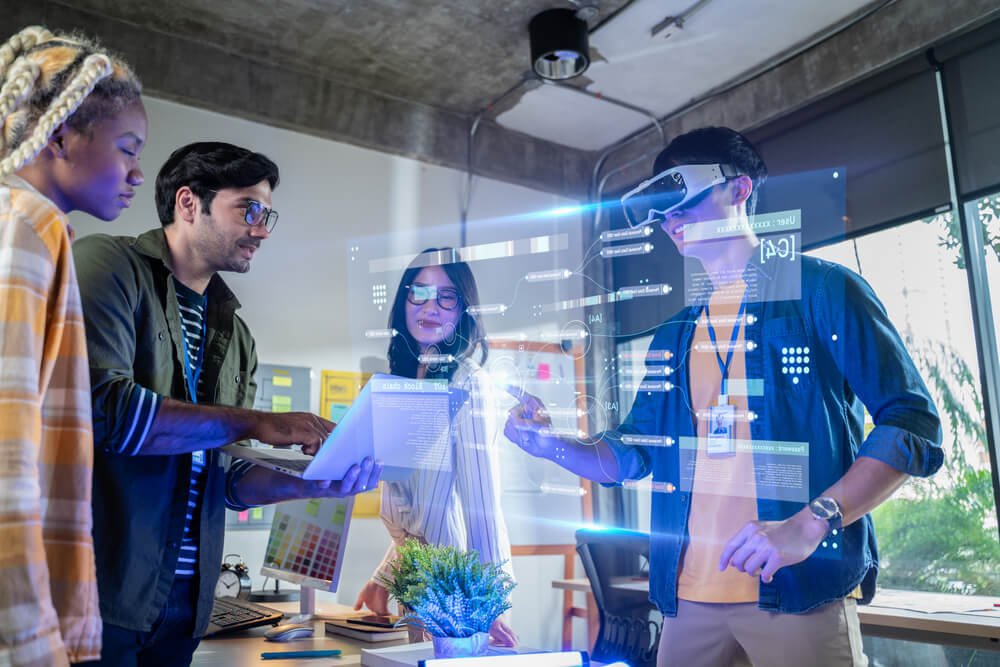
If you are at least a bit familiar with how Virtual Reality works, you are probably aware of its potential in various industries. Virtual Reality has already changed medicine & healthcare, the hospitality industry, education and many more. One might say the potential of VR in the coming years is almost unlimited. So, why not use it in brand marketing and product showcasing? No contraindications at all. A good marketer knows that VR may be the medium that should be used to attract and convert the target audience. Here is how to do it and why it is crucial to start using virtual reality in marketing right away.
Key Takeaways
- VR delivers immersive, interactive product experiences that help customers understand and test offerings before purchasing.
- Affordable VR hardware makes adoption easier, enabling brands of all sizes to use VR in marketing and product showcasing.
- VR strengthens brand storytelling, allowing companies to communicate values and unique selling points in an emotional, memorable way.
- Real-time user feedback from VR experiences helps refine products and improve customer engagement strategies.
- Early adopters gain a strong competitive advantage, as VR is rapidly becoming a preferred medium over traditional advertising.
What is Virtual Reality and how is it used in marketing?
Virtual Reality is a form of interactive software that immerses a user in a completely virtual environment. It usually requires a VR headset with special lenses. The most modern VR software makes it possible for users to immerse totally in the experience. By totally we mean 360 degrees. For those who still cannot get it – Virtual Reality brings you to the virtual world that doesn’t exist. This might be an office, a cosmic space or a sea bottom – imagination is all that limits you. Now you can imagine how VR in marketing can be used to demonstrate and promote products to potential customers, cannot you? VR marketing can be visual or multi-sensory, depending on the device. In order to provide users with a completely immersive experience, a full VR headset is necessary. With VR, you can craft user experiences, engage them and encourage conversions in interesting and innovative ways.
Read also our article about VR training.
The hardware of VR
There are various types of hardware within VR technology. For decades, Virtual Reality has been considered a futuristic and extremely expensive dream. However, it turns out that it’s different. VR refers to immersing a user in a virtual world using sophisticated software, that’s true. A few years later, the technology still relied on clunky headsets and expensive computers, that is also true. The technology has been evolving and now the VR experience that inspires both providers and customers is quite achievable and affordable. Virtual Reality applies to different media so it is crucial to choose the one that will let you design the right content and make good decisions when planning a VR experience for your customers. Currently, there are three top players in Virtual Reality headsets – Sony, Facebook and HTC.
Head-mounted displays
The simplest solution when it comes to Virtual Reality in marketing and product showcasing. It is the primary way users access Virtual Reality. The first VR head-mounted display was the Oculus Rift. It became the cutting-edge machine once Facebook bought it from a private company. Head-mounted displays use 360-degree positional tracking and OLED (usually) displays to prevent eye strain. The latest head-mounted solutions also utilize laser positioning and tracking technology so that a user is totally immersed in a virtual world and can interact with it seamlessly. Head-mounted displays require a computer to run. However, they are just perfect for marketing, branding and product showcasing. For example, they can give you a major advantage over the competition for trade shows. You can virtually demonstrate the car you are selling or even show customers risks experiencing while driving irresponsibly.
Mobile and standalone
We have explained what the pros and cons of head-mounted displays are. Let’s talk about mobile and standalone VR hardware now. For starters, they solve the problem of a necessary computer that is quite expensive but required to provide users with a fully immersive experience. Mobile VR hardware is something relatively cheap. The headset (Google Cardboard VR headset, the Samsung Gear VR) works with smartphones and is sold everywhere. This is a very scalable solution that allows you to communicate through VR to a large crowd. On the other hand, standalone VR hardware is viable, quite affordable and extremely scalable. Lots of people can use it at once and for now it is the best solution to capture the attention of the crowd. Available options now are e.g. Oculus Go and HTC Vive Focus.
Other VR options
Head-mounted displays, as well as mobile and standalone VR hardware, are popular, yet quite sophisticated options. However, there are other options for you to consider if you want to start your adventure with Virtual Reality. A very popular (and used for many years now) is the virtual 360-degree tour. Unfortunately, such a tour is just interactive and the user’s immersion isn’t total. A user can use their computer or mobile device to take a virtual tour with video on the website (or alternatively, on a crowd VR device).
Why Virtual Reality in marketing is the next logical step?
Virtual Reality is an emerging trend in sales and marketing strategies. Thanks to Virtual Reality, companies can bridge the gap between experience and action. Virtual Reality solutions can be used for promoting products and services showcased as a digital experience. VR technology is also a great opportunity for companies not only to promote existing products but also to showcase development. This way, your customers get interested in what you are creating. They give you instant feedback which affects the way you will develop your product or service further. The dynamic between customers and brands has been changing. No more ad blockers or clocking out of ads as quickly as possible – it is the opposite; customers crave for your new Virtual Reality ads to immerse in a new experience. They come to you instead of you needing to attract them. They want to see and try products before they buy them, from testing a new hairstyle, through driving a possible new car, ending at checking next travel destinations. Virtual Reality creates experiences that no other software product is capable of. A user gets a unique experience, a chance to test a product before buying it and, what might be the most important, they get an unparalleled sensation of the product leaving long-term memories. And this is something that builds brand identity and customer loyalty and makes you stand out amongst your competitors. Here is a quick summary of how Virtual Reality rocks in brand marketing campaigns and product showcasing:
You can model users’ behavior by showing them how your product or service is developed in real-time. Customers have a unique opportunity to see all development phases and deliver feedback you will utilize in the next phases. Creating awareness is much more successful when you build chemistry with the users. Feelings and emotions are much more powerful than badges and attractive visuals. Instead of using a ‘Product of the year’ certificate, invite users to the virtual world when they can test the product themselves. It really works.
You can present your values and unique selling points straightforwardly. Developing an eco-friendly product? Instead of presenting numerous certificates everywhere, invite potential customers to your eco-world. Show them what production looks like, what makes it so unique and special. This will be much more understandable for customers who often don’t get all those certifications.
You can (almost) forget about your logo. Thanks to Virtual Reality, you have a unique opportunity to build a real connection with users and potential customers. The brand is not just a logo. The brand is the history of the company, the experience it delivers to the users, the feelings it evokes etc. If you decide to use Virtual Reality in your brand marketing strategy, you will be able to switch to more an emotional approach that will pay dividends in the future (customer loyalty ratio etc.).
When you present your VR materials, you get feedback in real-time. This increases your brand exposure and, at the same time, gives you some relevant user insights.
See? Virtual Reality is going to further revolutionize brand marketing and product showcasing strategies. Soon, it may replace the traditional forms of advertising. For you and your brand, it may be key to become the pioneer in this market.
Read also: How Can Virtual Reality Enhance B2B Sales
How can Virtual Reality improve brand storytelling?
VR allows brands to move beyond static visuals and create fully immersive, narrative-driven experiences. Instead of showing certificates, slogans or product badges, companies can invite users into virtual environments that demonstrate values, processes, and emotions. This form of storytelling builds stronger emotional connections and increases long-term brand loyalty.
Why is VR becoming a powerful tool in product showcasing?
VR enables customers to test products long before making a purchase decision. From trying out a new hairstyle to test-driving a car or exploring future travel destinations, VR replicates real-life scenarios with unmatched precision. This reduces uncertainty, increases engagement, and significantly boosts conversion rates.
What types of VR hardware are best suited for marketing campaigns?
Marketers can choose between head-mounted displays, mobile VR, standalone devices, or even 360-degree virtual tours. Head-mounted displays offer the highest immersion and are ideal for trade shows or high-impact product demos. Mobile and standalone solutions are affordable, scalable, and great for reaching large audiences quickly. The choice depends on budget, mobility needs, and campaign goals.
How does VR help brands gather real-time customer feedback?
VR experiences generate immediate and highly reliable user reactions. Customers can interact with prototypes, explore product features, and experience the value directly. Brands can analyze behaviour, preferences, and engagement patterns to improve products and tailor communication strategies more precisely—all in real time.
Why is now the right moment to adopt Virtual Reality in marketing?
VR hardware is becoming more affordable and accessible, while consumer expectations for immersive and interactive experiences continue to grow. Early adopters gain a competitive advantage by standing out in crowded markets, increasing engagement, and building stronger brand loyalty. Companies that implement VR today will be better positioned as the technology becomes a mainstream marketing standard.

Author: Rafał Siejca
Rafal has over twenty years of corporate experience, including roles at Millennium Bank, Comarch, and leading software teams at PZU, one of Europe’s largest insurance companies. As one of Poland’s few true VR experts with a decade of experience, he ensures timely, high-quality project delivery as CEO and CTO.